

Written by Kellie Steed
Sources
13 November 2026
First Published
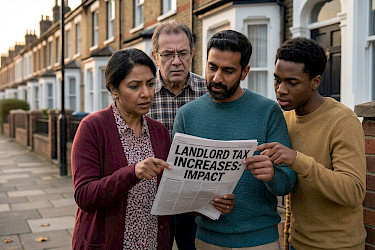
Landlords will pay more tax on their rental income from next April. In the Autumn Budget on 28 October 2026, the Chancellor added a further two percentage points to the property income tax rise announced a year earlier.
That means rental profits will be taxed 4 percentage points higher than today from 6 April 2027. But how much more you'll pay depends on your tax band, your mortgage and whether you own property in your own name or through a company.
What's changing?
Right now, rental profits are taxed at the same rates as your salary: 20%, 40% or 45%. From 6 April 2027, property income will have its own rates of 24%, 44% and 49%.
The change applies to landlords in England, Wales and Northern Ireland. The Scottish Government has the power to set its own rates.
The tax credit you get on mortgage interest is expected to rise from 20% to 24%, in line with the new basic rate. However, while this softens the blow, it doesn't cancel it out.
From the same date, your personal allowance will be used against your salary or pension first, before your rental income. For some landlords, that could mean more of their rent is taxed.
How much more will you pay?
The examples below are simplified. They assume all rental profit falls in one tax band and ignore other allowances. If your income is spread across multiple tax bands it's a good idea to speak to your accountant or tax adviser for further guidance.
Basic-rate landlord with a mortgage
Sean lets out one flat. After running costs, he makes £10,000 a year before her £5,000 of mortgage interest. Today he pays £2,000 in tax, less a £1,000 mortgage interest credit, so £1,000 in total. From April 2027, he'll pay £2,400 less a £1,200 credit, so £1,200. That's £200 more a year, so £200 of his £5000 profit after interest goes to tax.
Higher-rate landlord with a mortgage
Jamela earns a salary and makes £20,000 profit from two properties before £10,000 of mortgage interest. Today their tax bill is £8,000 less a £2,000 mortgage interest credit, so £6,000. From April 2027, it's £8,800 less a £2,400 credit, so £6,400. That's £400 more a year, meaning £6,400 of their £10,000 profit after interest goes to tax.
Higher-rate landlords feel the squeeze the most, because they pay 44% on rent but only get 24% back on mortgage interest.
Mortgage-free landlord
Margaret is a higher-rate taxpayer who owns her rental property outright and makes £20,000 profit a year. With no mortgage interest to offset, her bill rises from £8,000 to £8,800. That's £800 more a year, the full four percentage points.
Portfolio landlord
As a portfolio landlord, David owns six properties in his own name. He makes £60,000 profit before £30,000 of interest, all taxed at the higher rate. His bill rises from £18,000 to £19,200, which is £1,200 more a year.
Limited company landlord
Limited company landlords pay corporation tax, not income tax, so this rise doesn't apply to them. A company making the same £20,000 profit as Jamela, with £10,000 of interest, pays 19% on the remaining £10,000. That's £1,900, unchanged from today.
There is a catch. To take that money out personally, you'd usually pay dividend tax. At the higher dividend rate of 35.75%, that could add around £2,900, taking the total close to £4,800. That's still less than Jamela's £6,400, but limited company mortgage rates are often higher and setting up a company has its own costs.
What can landlords do now?
The new rates don't start until April 2027, so there's time to plan. Here are some steps worth considering.
- Review your mortgage: If your fixed rate ends in the next year, a lower rate cuts your interest bill and leaves more profit after tax. With the Bank of England raising Bank Rate to 4% on 5 November, it may pay to secure a deal early
- Check your rental yields: Some properties may no longer earn enough to justify keeping them. A clear view of each one's profit after tax will help you decide
- Think about ownership: Buying future properties through a limited company could make sense, especially for higher-rate taxpayers. Moving properties you already own into a company can trigger stamp duty and capital gains tax, so take tax advice first
Speak to an expert
Every landlord's situation is different. If you'd like to review your buy-to-let mortgage or explore limited company lending, our specialist advisers can help.
Get in touch for a free, no-obligation chat.