


Written by Mark Langshaw Reviewed by Lee Trett
5 November 2026
Reviewed by Lee Trett. Expert quote and key facts added
8 January 2025
Added sections on mortgage criteria. Added FAQs. Restructured article and added components to improve UX. Added internal links and article sources
24 November 2021
First Published
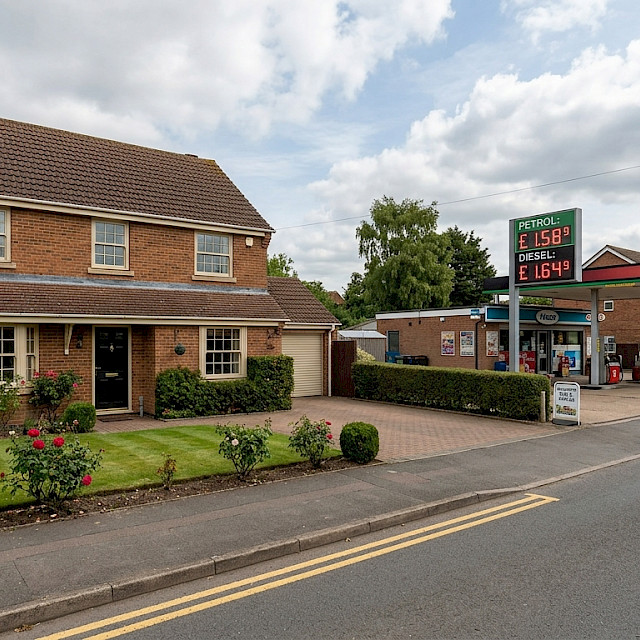
If you're interested in buying a property near a petrol station, you might be wondering about the benefits and downsides, or if lenders would even consider mortgages for homes near petrol stations.
Here we'll explore these pros and cons of this for those looking at buying in this type of location.
Key facts
- Most lenders will consider it: living near a petrol station usually isn’t a problem. Lenders tend to be more cautious only when the home is directly next door.
- Homes right next door can face tighter rules: some lenders won’t lend on homes bordering a petrol station. A few others cap borrowing at 60–75% of the property’s value, which means a deposit of 25–40%.
- Lenders look for nuisance: they may decline if noise, fumes, bright lights, heavy traffic or 24-hour opening could affect your enjoyment of the home or put off future buyers. The valuer’s report will often be the deciding factor.
- Insurance may cost more: some insurers charge higher premiums because of the location, so it’s worth shopping around before you commit.
- Check the area and the price: visit at different times of day to see how busy the petrol station gets. Homes next to petrol stations can sometimes be cheaper, so compare local prices, bearing in mind the same issues could affect what you get when you sell.
Can you get a mortgage for a house near a petrol station?
Yes. There will be mortgage lenders available if you are buying a property near a petrol station, and you are only likely to encounter issues if the property is located right next to the petrol station. If it’s merely in the near vicinity, lenders won’t be concerned.
Petrol stations are classed as commercial premises and they fall into the ‘Sui Generis’ category of this property type. Some lenders don’t offer mortgages for houses that are next to this class of commercial property, while others have specific criteria for deals like this.
The good news is that many of the issues you might face buying a property this close to a petrol station can be overcome with the help of a whole-of-market broker, like us.
Lending criteria for homes near ‘Sui Generis’ commercial properties
As previously mentioned, if the property you’re buying isn’t right next to the petrol station, you are unlikely to have to meet any extra lending criteria. If, however, it is next door, some lenders have specific requirements for homes beside ‘Sui Generis’ commercial properties (a property that doesn’t fit a standard planning use class).
The additional requirements are as follows:
-
Commercial activity levels: Some lenders may decline if the commercial activity at the garage is likely to cause a nuisance through noise, smell or unsociable hours. This may be a factor if the petrol station is particularly busy or has an on-site shop or other services that attract a lot of footfall or are open for 24 hours.
-
LTV caps: A few lenders will cap the LTV at 60-75% for properties bordering a petrol station, meaning you would need at least 25% deposit to get approved.
-
Extra valuer scrutiny: Some mortgage providers will only make a lending decision on a home next to a petrol station after subjecting the application to extra checks. They will place more scrutiny on the valuation report, needing it to confirm that the property’s location won’t make it undesirable for potential future buyers.
Should you buy a home near a petrol station?
While there are downsides, there are actually many advantages to buying property near a petrol station too. Homes near petrol station sites can sometimes be cheaper than the average for the local area, which means you could get a decent price.
You'll have easy access to fuel for your car should it ever run low, and within walking distance of a convenience store to grab a snack or other items if you need them.
It's also possible that they could become obsolete in the future as we shift to electric vehicles that need charging points, or alternative fuels like biogas, removing any barriers it may have had to selling your home in the future.
Since petrol stations tend to be located on main roads, you'll likely be close to major transport routes, which can cut down on the time and expense of your commute.
Available mortgage lenders
The vast majority of mortgage lenders will consider your application if the property is in the near vicinity of a petrol station, but if it is right next door, you may encounter restrictions.
Below you will find examples of the lenders who will offer mortgages near or beside ‘Sui Generis’ commercial properties such as petrol stations:
-
Halifax: May approve mortgages in these circumstances on a case-by-case basis.
-
Nationwide: May decline if the property’s location causes nuisance due to noise, smell or unsociable hours, and demand for owner occupation is affected.
-
Vida Home Loans: May cap the LTV at 60-75%.
-
Skipton Building Society: May lend with no caveats subject to a satisfactory valuation report.
Please note: Lender criteria changes regularly, so please check with a broker or the individual lender to find out their current criteria about petrol station proximity.

Begin your mortgage journey...
Things to consider
There is a risk of air pollution, possible ground pollution or soil contamination from spills, fumes, highly flammable liquids and the potential for criminal activity.
Depending on the opening hours, other main points for consideration include noise pollution, large vehicles at all hours and bright lights. Opening times can be another major issue, with 24-hour stations being something of an inconvenience for members of the local community.
Anybody considering buying a house next to a petrol station would do well to investigate the area thoroughly, and it's always best to consider all options before committing yourself.
The cost of home insurance
Insurance companies have different views. Since the possibility exists that a spill at a petrol station could cause damage to your property, some insurance companies may charge a higher premium for a home insurance policy on a house near a petrol station.
In addition, a large number of car thefts occur in these areas, so your insurance premium could go up if you live nearby a filling station.
Our expert weighs in:
Depending on the lender, this can translate to lower Loan-to-Value (LTV) caps. Thorough local searches, an exhaustive RICS valuation report, and whole-of-market advice are essential to ensuring the property remains both mortgageable and a sound long-term investment."

Mortgage Advisor & Director
House prices near petrol stations
Property prices can sometimes be cheaper if the home you are buying is located near or next to a commercial premises, such as a petrol station or service station.
The price of a property will vary depending on the location and other factors, such as local amenities and transport links.
If you're looking to buy a house near a petrol station it's worth considering all the advantages and disadvantages provided above before making your decision.
Get started on your mortgage journey
At Money Helpdesk, we work with hundreds of mortgage lenders offering the best deals on the market and our brokers specialise in helping customers buy homes under complex circumstances.
Get started here to compare the latest rates and deals from mortgage lenders across the entire market.
FAQs
Yes. There are a similar number of lenders available for buy-to-let mortgages near commercial premises and many of them apply the same caveats as residential lenders due to concerns that the property’s location might put off potential renters.
Deposit requirements and interest rates are usually higher for these mortgages and you will need to meet the standard criteria for buy-to-let mortgages too.
See our buy-to-let mortgage guide for more information about the requirements.
Underground fuel storage is one of the primary concerns for properties adjacent to petrol stations. Older single-walled steel tanks are prone to corrosion and slow leaks over decades, which can impact surrounding soil and groundwater.
However, modern petrol stations are subject to strict environmental regulations, utilising double-walled fiberglass or lined steel tanks equipped with continuous leak-detection and vapor-monitoring systems. Your surveyor or environmental search report will typically highlight the age and regulatory compliance status of local storage infrastructure where available.
Volatile organic compounds (VOCs) such as benzene and petroleum hydrocarbons can evaporate into the air or migrate underground through soil pores.
While modern petrol stations use Stage II vapor recovery systems on pumps to catch fumes, homes located directly adjacent may still experience occasional odors during fuel deliveries or in warm weather. If there are concerns about underground migration, an environmental surveyor can perform soil vapor testing to ensure indoor air quality remains safe and unimpacted.
If a nearby petrol station closes, the site requires extensive environmental remediation (decommissioning and removing underground tanks, testing soil, and treating any contamination) before it can be redeveloped.
While replacing a petrol station with residential housing or low-impact commercial space can ultimately boost surrounding property values, the remediation and construction phase can take several years. Your solicitor can check local council planning portals for any existing redevelopment applications or land designation status.