


Written by George Sweeney Reviewed by Craig Watson
8 June 2026
First Published
If your business is looking to reduce energy costs, improve sustainability, or move away from traditional heating systems, installing a commercial heat pump could be worth considering.
Here, we explain how business heat pumps work, the different types available, the potential benefits for your company, and how to find the right heat pump setup for your premises.
What are business heat pumps?
They are renewable heating systems designed to provide heating and, in some cases, cooling for commercial premises. Rather than generating heat by burning fuel, heat pumps transfer heat from the air, ground, or water into your building using electricity and refrigeration technology.
Because they can operate far more efficiently than traditional heating systems in certain environments, many businesses are exploring heat pump installations as part of wider energy-efficiency or net zero strategies.
How do they work?
They work by extracting heat energy from an external source and then transferring it into a building.
Although they use electricity to function, they can still be highly efficient because they move and transfer heat rather than generate it. The process typically involves:
-
Absorbing heat from the outside air, ground, or water source into a refrigerant
-
Compressing the refrigerant gas to increase the temperature
-
Transferring the heat into your building’s heating system
-
Distributing heat through radiators, underfloor heating, or warm air systems
Some commercial heat pumps can also reverse the process during warmer months to provide cooling.
Types of commercial heat pumps available
There are several different types of commercial heat pumps available, and the right option depends on your business premises and heating requirements.
Air source heat pumps (ASHPs)
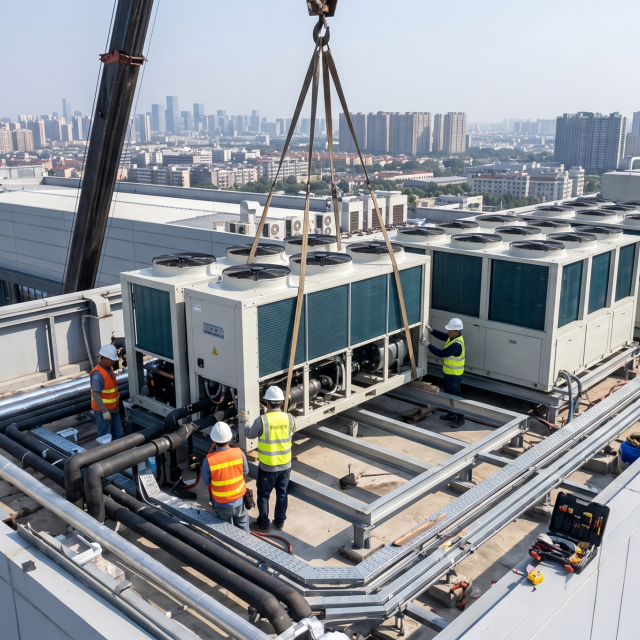
These are one of the most common options for UK businesses. They extract heat from the outside air and transfer it into the building.
Installation can often be simpler and less disruptive than ground source systems because they don’t usually require excavation work.
Ground source heat pumps (GSHPs)
Ground source heat pump installation for businesses involves extracting heat from the ground using buried pipe systems. Ground temperatures tend to remain relatively stable throughout the year, which can make these systems highly efficient over the long term.
However, installation costs are usually higher due to the excavation and infrastructure requirements.
Water source heat pumps
Water source heat pumps extract heat from nearby water sources such as rivers, lakes, or boreholes.
These systems are less common but can work effectively for businesses located close to suitable water sources.
Hybrid heat pump systems
Some businesses install hybrid systems that combine a heat pump with traditional gas or oil heating.
This can help provide greater flexibility during colder periods or reduce the upfront costs associated with fully replacing an existing heating system.
Benefits of installing a heat pump
Commercial heat pumps can offer a variety of potential benefits for businesses, particularly as energy prices rise and sustainability expectations continue to evolve.
-
Lower long-term energy costs: Although installation costs can be high initially, heat pumps may reduce your long-term heating costs (depending on the current setup, electricity prices, and building efficiency).
-
Reduced carbon emissions: Because heat pumps operate using renewable heat sources rather than direct fossil fuel combustion, they can help lower your business’s carbon footprint. This can help support wider sustainability goals or ESG strategies.
-
Improved energy efficiency: Heat pumps can operate much more efficiently than some traditional heating systems, particularly in well-insulated commercial buildings.
-
Support for net-zero targets: Many businesses are exploring heat pump installations as part of broader decarbonisation plans or in preparation for future environmental regulations.
-
Potential grants and reliefs: Some businesses may qualify for government-backed heat pump grants for business premises, such as the Boiler Upgrade Scheme (BUS) or other tax reliefs and financial supports designed to encourage renewable heating adoption.
How an energy adviser can help
Installing a commercial heat pump isn’t simply about choosing a product or installer. The most suitable system will usually depend on your business’s energy usage, building type, operational requirements, and long-term energy strategy.
An experienced energy advisor can help your business by:
-
Reviewing your current energy usage and heating costs
-
Producing a detailed breakdown of your business energy consumption
-
Identifying how much your company could save with a heat pump
-
Offering a tailored recommendation about the best type of system to use
-
Recommending other renewable technologies to use alongside a heat pump
-
Helping you understand available grants, tax relief, and funding support
-
Introducing you to suitable suppliers or heat pump installers for your business
Because every commercial premises is different, getting tailored advice ensures you avoid overspending on the wrong type of renewable heating system.
If you’d like to explore whether a heat pump could benefit your company, you can get started by discussing your requirements with an experienced energy advisor below.

Get a free business energy health check
Best commercial heat pump manufacturers
The right heat pump manufacturer and heat pump installer for your business will usually depend on the size of your premises, installation complexity, energy usage, and long-term operating costs.
To give you an idea about potential options, here are some examples of popular business heat pump manufacturers with products available in the UK:
-
Mitsubishi Electric: Offers a wide range of commercial air source heat pumps commonly used in offices, hospitality venues, and retail premises.
-
Daikin: Known for both air source and hybrid commercial heat pump systems, including larger-scale installations for business and industrial buildings.
-
Samsung: Provides commercial heating and cooling systems designed for smaller and medium-sized business premises.
-
Vaillant: Popular with smaller businesses, they offer renewable heating solutions, including commercial air source and ground source heat pump systems.
-
Panasonic: Offers commercial heat pump systems that use natural refrigerants and are designed to operate efficiently in colder temperatures.
-
Bosch: Has a range of renewable commercial heating technologies designed for larger premises and energy-efficient buildings.
Alternative ways to improve your energy efficiency
Heat pumps are only one part of improving business energy efficiency. Other measures for your business that you may want to consider include:
-
Installing solar panels
-
Upgrading the building’s insulation
-
Switching to LED lighting
-
Installing smart energy meters or monitoring systems
-
Replacing outdated boilers or HVAC equipment
-
Improving building management controls
-
Carrying out commercial energy audits
In many cases, conducting a full business energy audit can reveal ways to combine multiple energy-efficiency improvements to deliver greater cost savings rather than relying on a single technology.
Grants, supports, and tax relief for businesses
Some businesses may be eligible for financial support when investing in renewable technologies such as efficient heat pump systems. Potential support schemes can include:
-
Boiler Upgrade Scheme (BUS): Some businesses in England and Wales may qualify for the BUS scheme, which offers up to £7,500 off the cost and installation of air-to-water, ground-source, and water-source heat pumps.
-
Full Expensing tax relief: Limited companies that pay Corporation Tax may be able to claim Full Expensing on qualifying heat pump systems. This allows businesses to deduct 100% of the qualifying installation and equipment costs from taxable profits in the same financial year the investment is made.
-
Annual Investment Allowance (AIA): Businesses that don’t qualify for Full Expensing, such as sole traders or partnerships, may be able to claim through the AIA. The AIA currently allows eligible businesses to claim 100% tax relief on qualifying purchases of heat pump equipment, up to £1 million per year.
-
Energy Technology List (ETL): Some commercial heat pump systems may appear on the government-backed ETL, which highlights energy-efficient technologies that meet specific standards. Choosing qualifying equipment can help demonstrate compliance with HMRC criteria when claiming capital allowances or other tax reliefs.
-
Business rates exemptions: In England, eligible renewable energy plant and machinery used for onsite generation or low-carbon heat networks may qualify for business rates exemptions until 31 March 2035.
-
Local authority grants and regional support: Depending on your location and business sector, additional funding may also be available through things like local council sustainability grants, regional decarbonisation programmes, and energy efficiency loan schemes.
Because support schemes change regularly, many businesses choose to speak with an energy advisor to understand what funding or grants are currently available.
Get independent renewable energy advice
Installing a commercial heat pump can be a significant investment, but one that can lead to a variety of long-term benefits for your business. However, it’s worth ensuring you set up an appropriate system to maximise your return on investment.
Here’s why businesses across the UK use Money Helpdesk when exploring renewable energy solutions:
-
Access to experienced commercial energy advisors
-
Support identifying suitable heat pump systems and installers
-
Guidance on grants, funding, and renewable energy options
-
Free initial chat with no obligation to proceed further
If you’d like to explore commercial heat pump installation or discuss renewable energy options for your business, you can get started here.
FAQs
Many businesses choose to work with specialist commercial renewable energy companies or installers experienced in larger-scale heating systems.
Speaking with an energy advisor first can help ensure you’re introduced to installers suited to your type of premises and heating requirements.
The cost of a business heat pump can vary significantly depending on the size of the premises, the type of system being installed, and any infrastructure work required.
Air source heat pumps are generally cheaper to install than ground source systems, while larger commercial buildings may require more complex and higher-capacity installations.
This is a renewable heating system that extracts heat from the ground using buried pipework.
These systems can provide highly efficient heating for larger commercial premises, although installation costs are usually higher than air source systems.
Yes, many renewable energy installers specialise in air source heat pump installation for business premises, including offices, retail units, warehouses, and hospitality venues.
The suitability of an air source system will depend on your building type, insulation levels, and heating demand.
Commercial heat pump installation costs can vary significantly depending on the size of the premises, the type of system, and whether infrastructure upgrades are required.
Ground source systems are usually more expensive upfront than air source systems because of the excavation work required.
In some cases, yes. However, whether a heat pump can fully replace a commercial gas boiler will depend on the building’s insulation, heating requirements, and existing infrastructure.
Some businesses instead choose hybrid systems that combine heat pumps with traditional heating.
Modern commercial heat pumps are designed to operate in cold UK temperatures, although efficiency can vary depending on the outside temperature and the type of system installed.
Ground source systems generally maintain more stable efficiency levels during colder periods.