


Written by George Sweeney Reviewed by Craig Watson
Sources
24 April 2026
First Published
If you run a smaller company, managing your energy costs can still have a noticeable impact on your overheads; and micro business energy contracts are designed for businesses with lower energy consumption.
Here, we’ll explain how micro business energy works, the types of contracts available, how to switch suppliers, and where to find the most competitive energy prices for your business.
What’s the definition of micro business energy?
According to Ofgem guidelines, a micro business energy customer is typically defined as a small business that meets at least one of the following criteria:
-
Uses no more than 100,000 kWh of electricity per year
-
Uses no more than 293,000 kWh of gas per year
-
Employs fewer than 10 people (or an annual turnover or balance sheet under the equivalent of €2 million)
Because of this classification, micro businesses can usually access clearer contract information, fairer switching rules, and additional support compared to larger organisations.
How does micro business energy work?
Micro business energy works in a similar way to standard commercial energy setups, but with some key differences in how the contracts are structured and regulated.
Suppliers will assess your energy usage, business type, and location to provide a tailored quote. Most micro business energy contracts are fixed-term agreements, typically lasting between 1 and 4 years.
During the contract, your unit rate is usually fixed, providing predictable monthly costs. When your contract ends, you can renew, switch suppliers, or risk being placed on higher out-of-contract (deemed) rates.
Because pricing is bespoke, even comparable micro businesses are unlikely to receive identical rates, which is why comparing suppliers and negotiating the best rates is crucial.
Types of micro business energy contracts
Like most companies, micro businesses can access a range of business energy contracts, depending on how much flexibility or price certainty is needed:
-
Fixed-rate contracts: Lock in your energy unit rate for a set period, providing stability and protection against energy price increases.
-
Variable-rate contracts: Rates can fluctuate based on wholesale energy prices. These offer flexibility but less certainty over future costs.
-
Deemed or out-of-contract rates: If you don’t agree a new contract or move into new premises without arranging an energy supply, you’ll usually be placed on higher default rates.
-
Renewable energy tariffs: Some suppliers offer green tariffs sourced from renewable generation, which can support your sustainability goals.
How to switch micro business energy suppliers
Switching micro business energy suppliers can be a straightforward way to reduce your costs, especially if your current contract is ending or you’re on higher out-of-contract rates.
Here are the typical steps for switching business energy supplier:
-
Speak to an adviser: An experienced energy adviser or broker can review your current contract and usage.
-
Compare options: Your advisor can carry out a comparison of tariffs and rates across micro business energy suppliers.
-
Negotiate a contract: Your energy advisor will negotiate and agree a new contract with your chosen supplier.
-
Switch suppliers: The new supplier will arrange the switch and start date during an appropriate window.
For micro businesses, switching can be simpler than for larger organisations, and there is typically no disruption to your energy supply.
Working with a skilled energy advisor or broker can help ensure you find the best deal and avoid common switching pitfalls.

Get 100% independent mirco business energy advice
Other services we can provide for UK micro businesses
Alongside helping you switch suppliers, there are additional services we can help with to support better energy management and cost control for your micro business:
-
Net Zero consultancy: Guidance on reducing your carbon footprint and transitioning towards more sustainable energy usage.
-
Bill validation: Reviewing your energy bills to identify errors, overcharges, or incorrect tariffs.
-
Complete energy audit: A detailed assessment of how your business uses energy, helping identify inefficiencies and opportunities to reduce consumption.
All of these services can be particularly valuable if you want to take a more strategic approach to managing your business’s energy use.
Best UK micro business energy suppliers
There are several suppliers that cater to micro business energy customers, although the best option will depend on your usage, location, and contract preferences.
Some well-known micro business energy suppliers include:
-
Octopus Energy: Offers flexible business energy tariffs and renewable electricity options.
-
EDF Energy: Provides fixed-rate contracts for micro businesses, along with options for renewable energy and smart meter support.
-
E.ON Next: Targets small and micro businesses with simple tariffs, digital account management, and renewable energy options.
-
British Gas Business: Offers a range of fixed and variable tariffs, with additional support services for small and micro businesses.
While these suppliers are popular options, not all will offer the most competitive rates for micro businesses. Some of the best deals may only be available through brokers or tailored, negotiated contracts.
Renewable energy for micro businesses
Renewable energy is becoming more accessible for micro businesses across the UK, and greener options may include things such as:
-
Green tariffs supplied from renewable sources
-
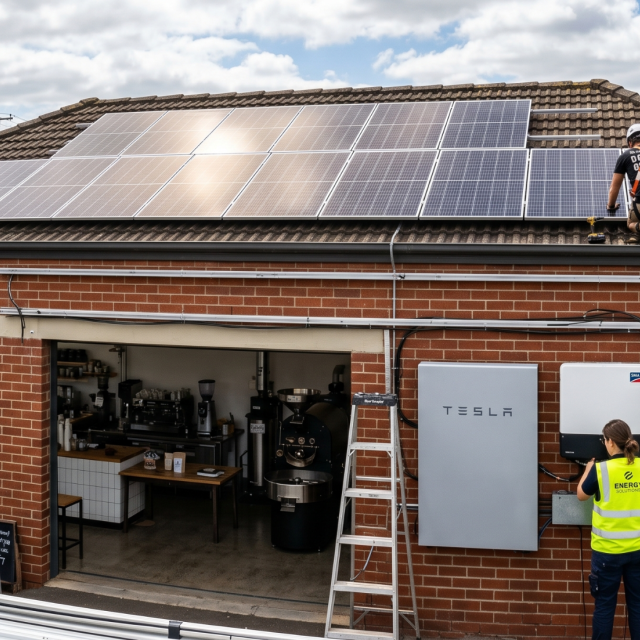
Installing on-site solar panels
-
Carbon offsetting solutions
Switching to renewable energy for your micro business can reduce your environmental impact and improve your company's perception, particularly if sustainability is important to your customers.
Get an energy health check for your micro business
Micro business energy contracts can be more complex than they first appear, with pricing often tailored to your usage, location, and contract terms. Because of this, it’s not always easy to know whether you’re currently on a competitive deal.
Here’s why micro businesses across the UK use Money Helpdesk to review their energy plans:
-
Access to experienced micro business energy advisors
-
Whole-of-market comparisons across leading UK suppliers
-
Support negotiating rates and switching energy suppliers
-
Free business energy health check with no obligation to proceed further
If you’d like to review your current energy contract or explore more competitive prices and terms for your micro business, you can get started here.
FAQs
Yes, micro businesses in the UK can access the Energy Ombudsman if they have a dispute with their supplier that can’t be resolved directly.
This provides an independent service to help resolve complaints related to billing, service issues, or contract disputes.
There isn’t a single supplier that always offers the lowest prices, as business energy quotes are tailored to your usage and circumstances.
The most effective way to find competitive micro business energy prices is to compare multiple suppliers and contract options, ideally with the help of an energy advisor who can access the wider market and negotiate exclusive deals.
Micro business energy customers benefit from additional protections compared to larger businesses. Suppliers are required to provide clearer contract terms, renewal notices, and fairer switching processes.
However, they do not have the same level of protection as domestic energy customers, so it’s still important to review your contracts carefully with expert support.
You can usually switch suppliers when your contract is coming to an end or during a renewal window.
Switching mid-contract may result in early termination fees, so it’s important to check your terms before going ahead with a switch.